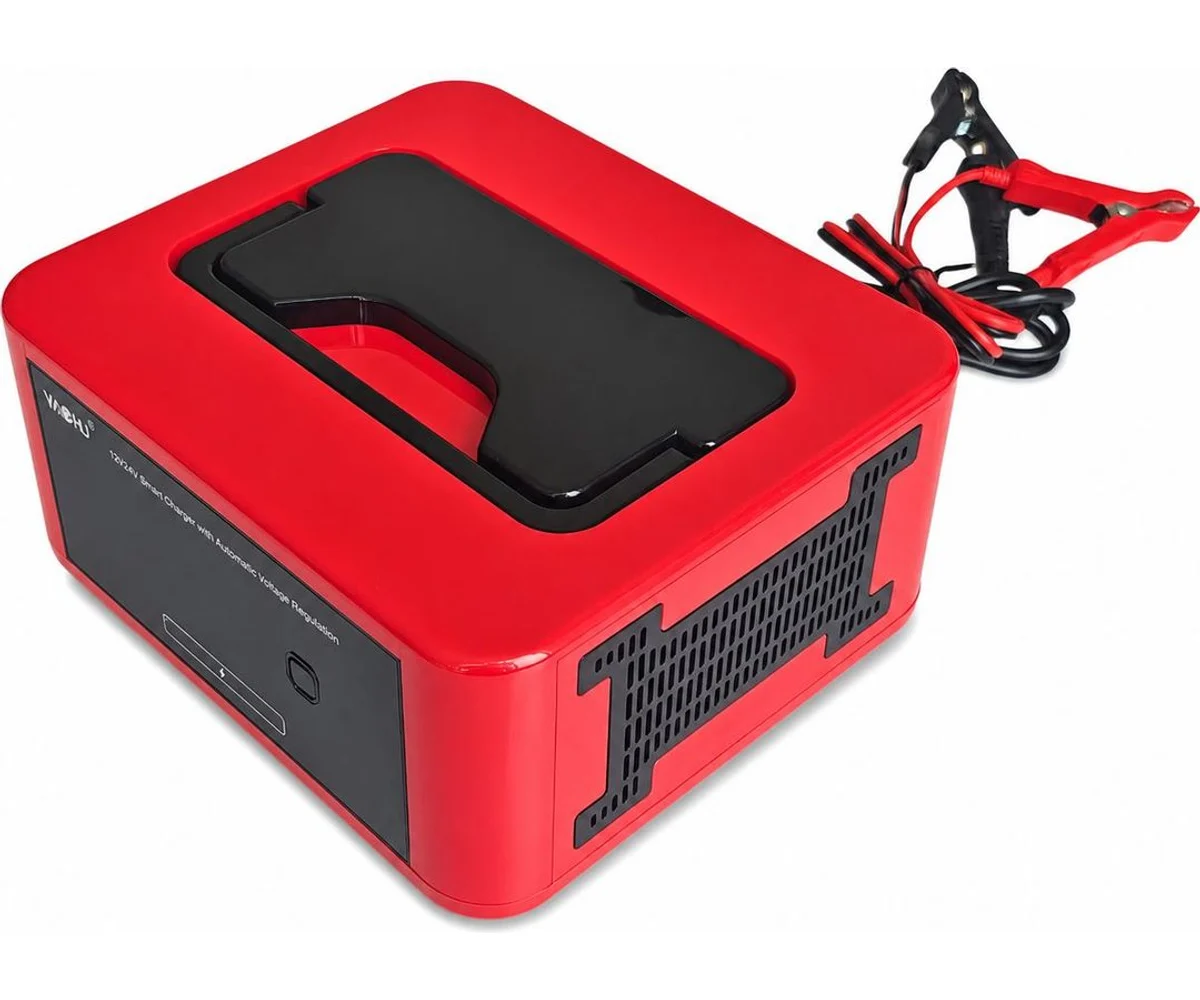
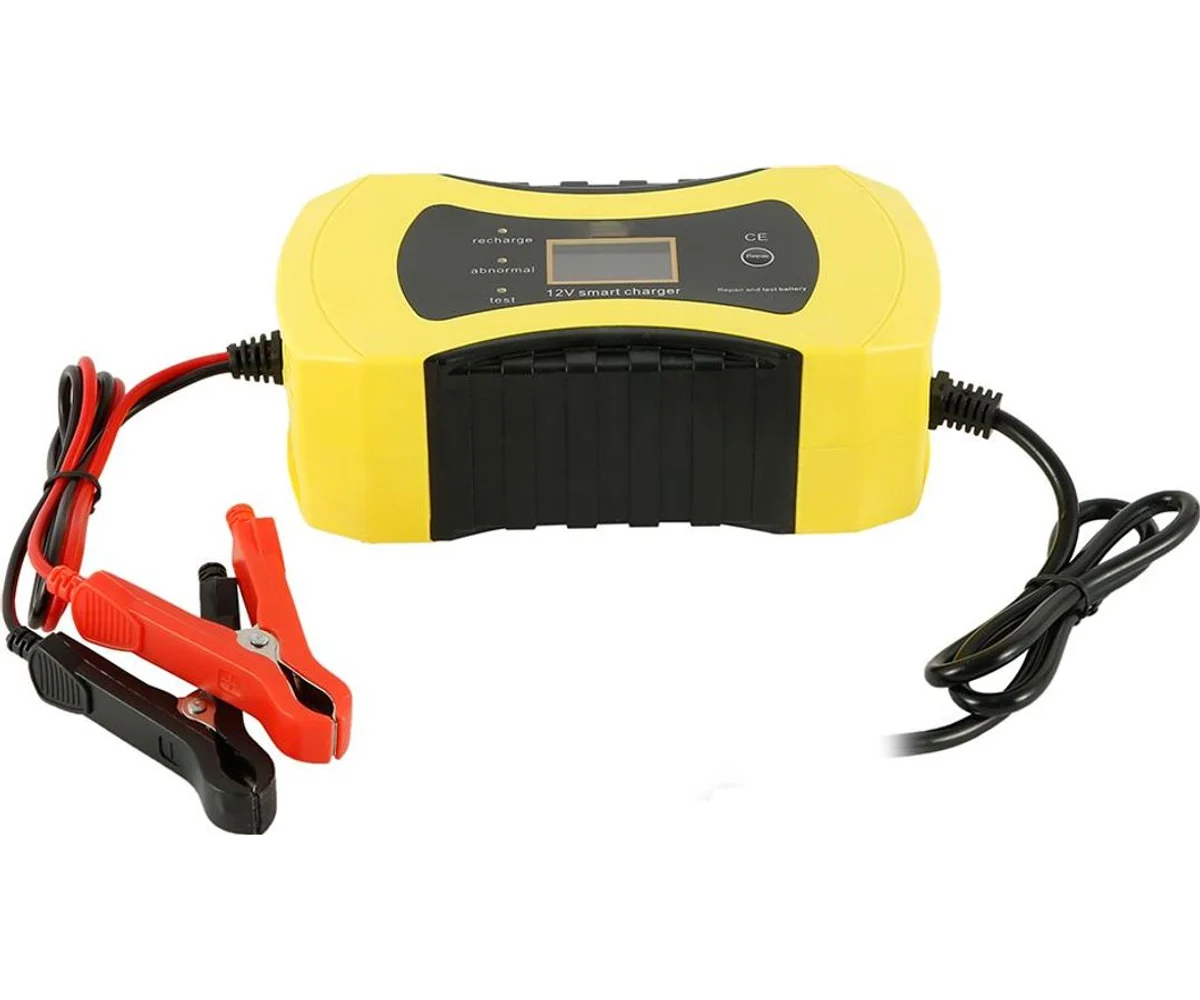
THE SHORT ANSWER
Describe the workshop’s actual battery-charging task before selecting equipment. Confirm the battery specification, charging profile and operating duty. A portable charger listing does not by itself establish diagnostic power-supply, programming-support or unattended-maintenance capability.
Describe what the equipment needs to do
Identify whether the requirement is charging a compatible starting battery or another task, such as supporting vehicle electronics during service. These are different requirements and should be stated separately in a buying brief.
The selected catalog does not establish diagnostic power-supply or vehicle-programming support. If that is the job, ask for purpose-specific evidence instead of assuming that a charging mode provides it.
Collect the battery and duty requirements
Record the battery system’s voltage, chemistry, subtype, capacity and manufacturer’s charging instructions. Ask what operating duty and environment the equipment must support. If several battery types are involved, document each requirement.
Do not assume all start-stop batteries or every AGM, GEL or EFB version are covered. The exact charger configuration, charging profile and battery-maker requirements need to agree.
| Requirement | What to ask for |
|---|---|
| Battery | Voltage, construction, capacity and charging instructions |
| Duty | Expected task and operating conditions, with model-specific evidence |
| Connection | AC plug, clamp or connector arrangement and polarity requirements |
| Supply approval | Exact model, required documents and agreed sample checks |
Keep maintenance and repair claims specific
A smart or automatic label does not establish approval for a permanent connection or winter-long unattended maintenance. Any such function needs explicit support in the exact model instructions.
Repair mode cannot guarantee that a damaged or end-of-life battery can be recovered. An uncertain battery condition should be assessed; a procurement guide is not a procedure for defeating safety protections.
Take the working requirement to the supplier
Use the model pages as a factual starting point, then send quantity, destination, battery requirements, intended duty and the evidence still needed. The supplier can review the requested configuration against that brief.
If the published range does not establish the required duty, keep the result as an open requirement. A vehicle category, product photo or enclosure size cannot settle the question.
Common questions
Can these listings be treated as programming-support power supplies?
No. That capability is not established by the selected catalog. Ask for evidence for the actual service task.
Can an automatic charger be left connected indefinitely?
Do not assume so. The exact model instructions must support the intended connection and operating duty.
Sources & scope
General equipment guidance and selected-model facts have different sources. A reference to another manufacturer explains a product category; it does not establish a POWER1986 capability, approval or brand relationship.
- Yuasa: Battery Care & Maintenance ↗
- POWER1986: sample inspection checklist ↗
- POWER1986: maximum vs continuous charging current ↗
Model facts come from the current approved POWER1986 catalog. Unconfirmed fields remain open. This is buying guidance, not an operating procedure or a model-specific compatibility approval.