THE SHORT ANSWER
Choose equipment for the job you need. A mains-powered battery charger replenishes a compatible battery over a charging cycle. A jump starter provides starting assistance. The POWER1986 chargers featured here are not listed as jump starters.
Two jobs that should not be confused
A flat-battery question can mean several things: a vehicle that needs starting assistance, a battery that needs recharging, or a battery that needs professional assessment. Start by describing the job, rather than ordering from the appearance of the enclosure or clamps.
The mains-powered chargers in this guide need an appropriate AC supply. They are selected by the battery requirement and the charger specification. A portable jump pack is a different product category; check its own instructions and starting limits.
| Question | Battery charger in this guide | Jump starter |
|---|---|---|
| Main task | Recharge a compatible battery | Provide engine-starting assistance |
| Rating to interpret | Battery voltage, charging current and charging profile | The specific product’s starting-assistance rating |
| Before selecting | Confirm battery chemistry, Ah capacity and permitted charging conditions | Confirm the jump-starter manufacturer’s vehicle and battery requirements |
Read the rating in context
A charging-current figure cannot be read as an engine-starting rating. Even among chargers, a maximum current and a continuous-current rating are different claims. Compare like-for-like wording and retain anything that still needs confirmation.
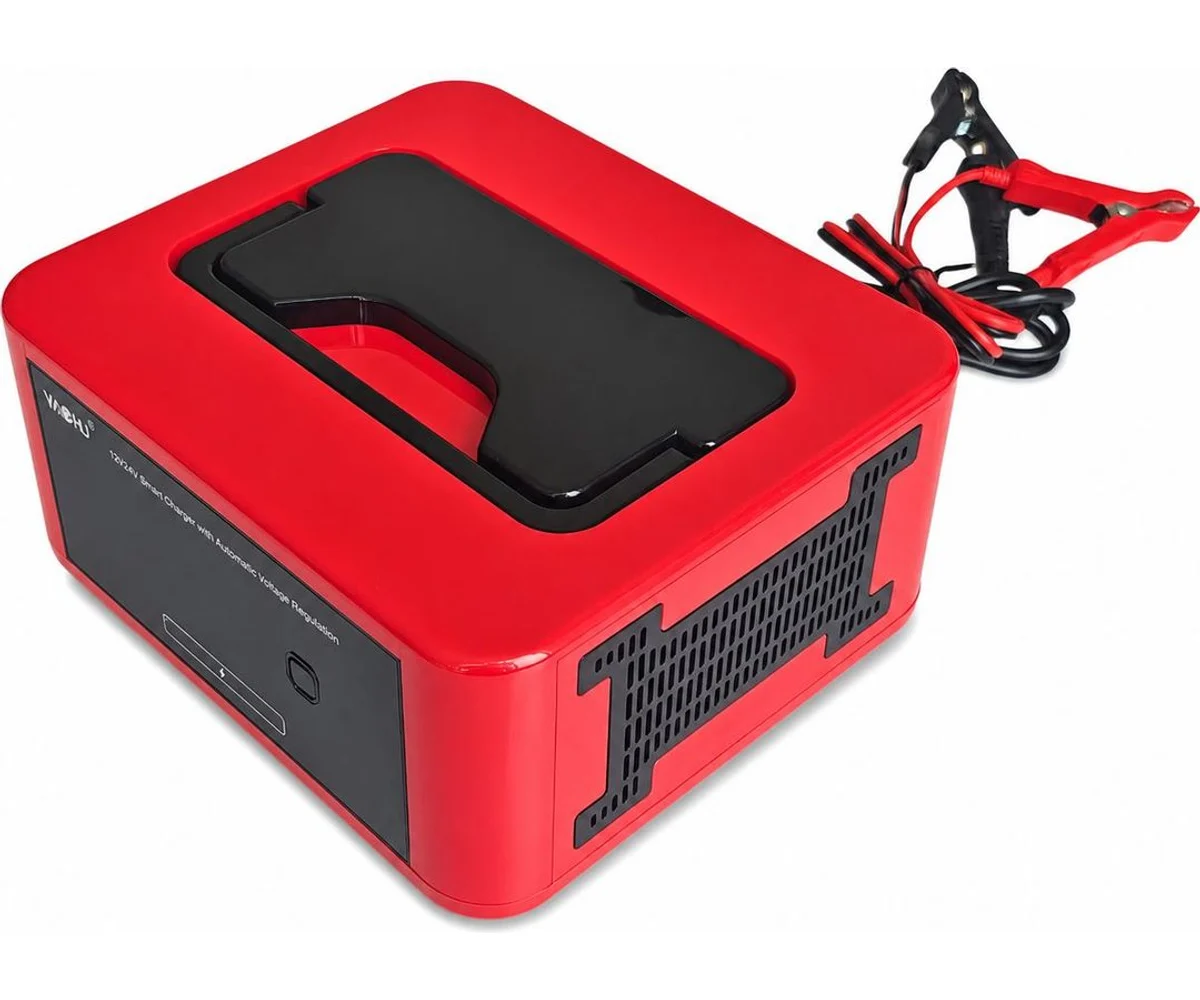
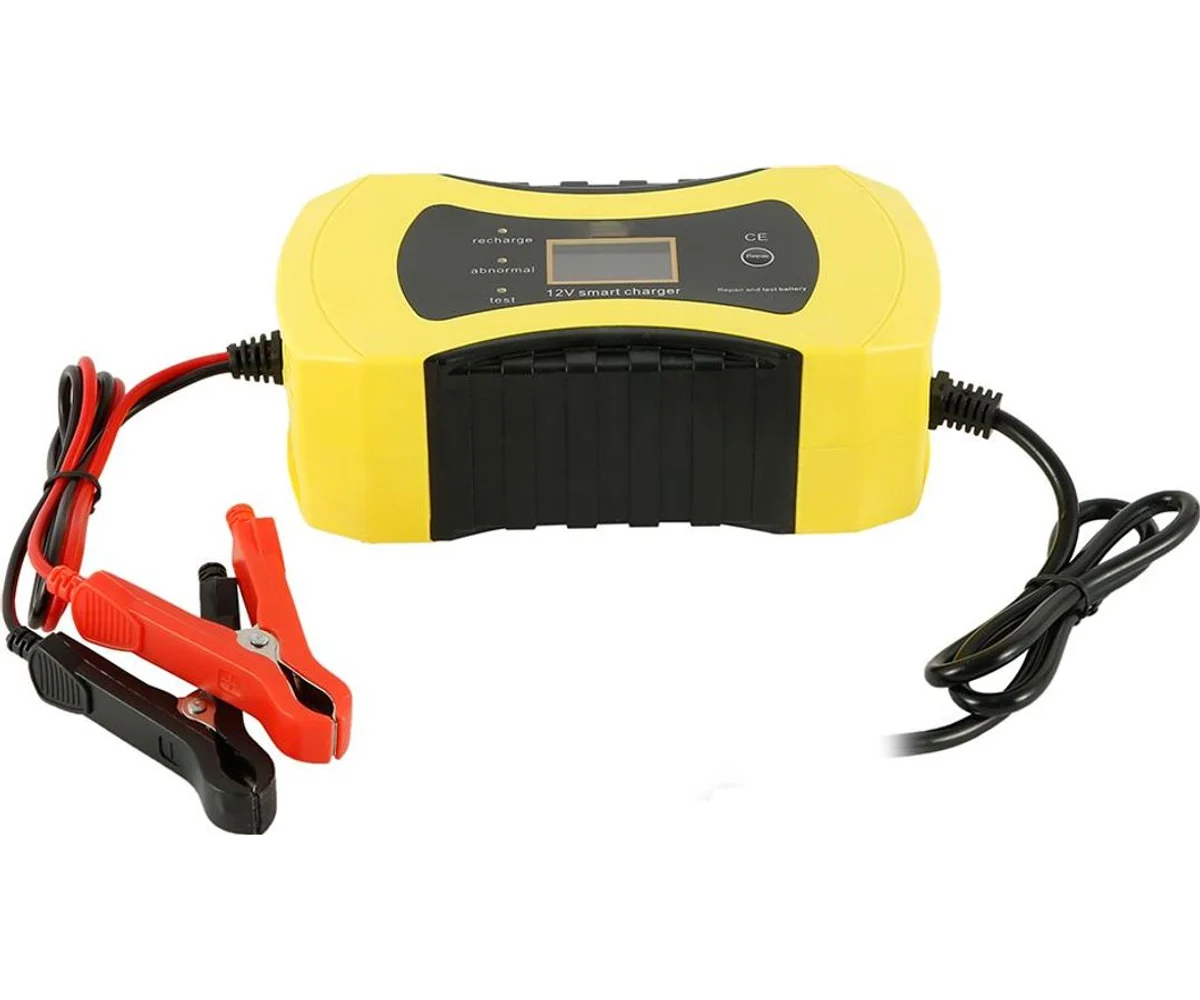
The red POWER1986 model has separate 12V and 24V published values. The portable yellow-and-black model uses specified-output wording. Follow the linked product pages for their exact limits; neither listing establishes a jump-start function.
Repair mode is not a promise of recovery
Where repair mode is listed, it does not guarantee recovery of a damaged or end-of-life battery. A mode name does not establish that a battery is suitable for charging or that the equipment can safely start an engine.
If the battery is damaged or its condition is uncertain, have it assessed and follow the battery and equipment manufacturers’ instructions. This guide does not provide a procedure for bypassing charger detection or protection.
For a distributor or workshop buyer
Keep charging and starting-assistance requirements separate in the buying brief. State the battery details, intended job, quantity and destination. This avoids receiving a quotation for an attractive-looking product that performs the wrong task.
For the charger range shown here, continue to the model page to check the specification. For a different requirement, explain it in your POWER1986 inquiry; a request for a function is not confirmation that it is available.
Common questions
Can these POWER1986 models jump-start a vehicle?
They are not listed as jump starters. Do not treat their charging-current figures as engine-starting ratings.
Does repair mode guarantee a battery can be restored?
No. Recovery of a damaged or end-of-life battery is not guaranteed.
Sources & scope
General equipment guidance and selected-model facts have different sources. A reference to another manufacturer explains a product category; it does not establish a POWER1986 capability, approval or brand relationship.
- NOCO GENIUS5: example of a mains-powered battery charger ↗
- NOCO GB40: example of a portable jump starter ↗
- Yuasa: Battery Care & Maintenance ↗
Model facts come from the current approved POWER1986 catalog. Unconfirmed fields remain open. This is buying guidance, not an operating procedure or a model-specific compatibility approval.