THE SHORT ANSWER
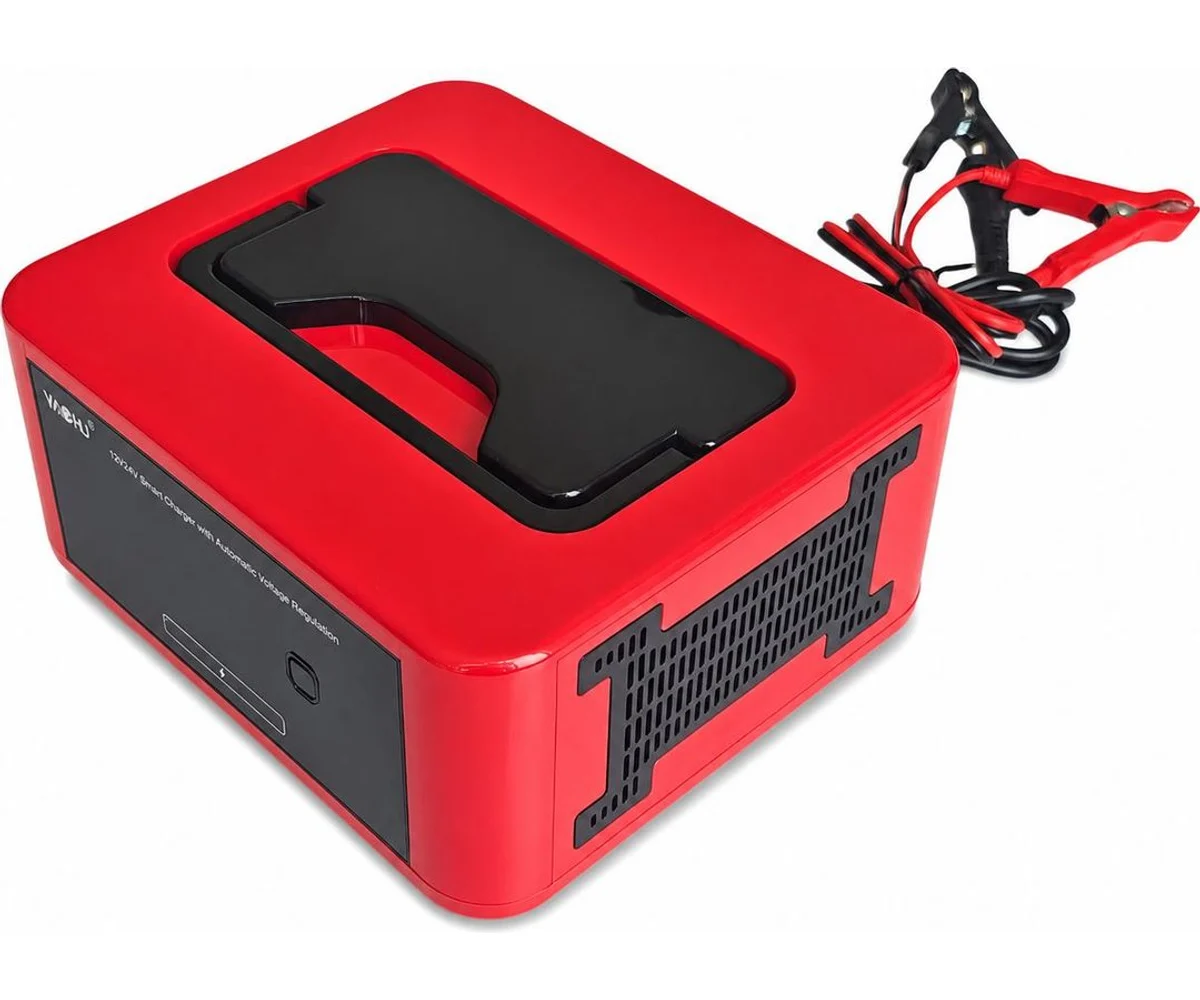
Use the battery system’s documented nominal voltage as a starting point. A 12V-only charger is not established as suitable for a 24V battery. A dual-voltage label still requires confirmation of the correct version, charging profile and battery requirements.
Confirm the system, not just the vehicle name
Read the battery label and the equipment documentation. Record the nominal voltage, chemistry and capacity in Ah. If the installation uses multiple batteries, use the equipment maker’s documented charging requirement instead of guessing from battery count.
Nominal battery voltage and the actual charging voltage are different specifications. A “12V” label alone does not tell you the complete charging profile, permitted current or supported battery construction.
Compare the exact output version
A dual-voltage product may list different limits for each mode. Keep the 12V and 24V figures in separate rows, and ask how the exact version selects or confirms the required mode. Do not infer automatic detection from a similar enclosure.
| Buying question | 12V-only model | 12V / 24V model |
|---|---|---|
| Battery system | Confirm the listed 12V application | Confirm which mode and battery system apply |
| Output current | Retain the model’s own rating wording | Check the published value for each voltage |
| Unresolved fields | Ask before treating the model as a match | Ask for any unconfirmed mode-specific rating |
Voltage is one part of the selection
Battery capacity, permitted charging current, battery subtype and intended duty also matter. A general lead-acid description does not prove that every AGM, GEL or EFB charging requirement is supported.
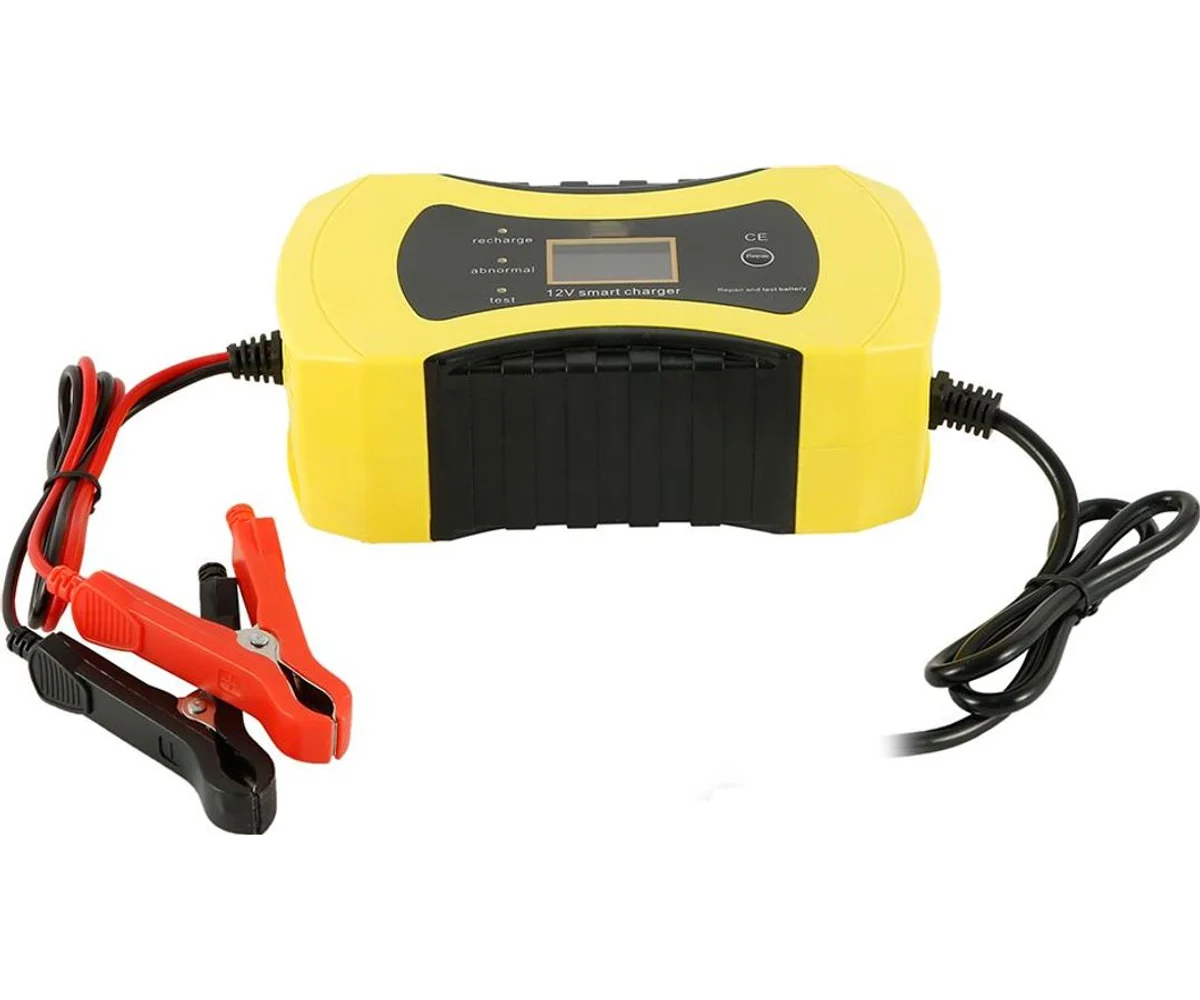
The portable 8A model’s recommended capacity and continuous-current rating remain open in the current catalog. The exact model page makes those gaps visible instead of supplying values from a similar-looking charger.
Send a useful model question
Provide the battery’s voltage, type and Ah label, the equipment, expected charging task, destination and required AC plug. Include the model you are considering and ask about any rating that is not established.
For 6V or lithium requirements, do not assume these selected lead-acid models apply. POWER1986 keeps its lithium range separate; another voltage or chemistry is a requirement to review, not an available-model promise.
Common questions
Is nominal battery voltage the same as charging voltage?
No. Confirm the charging profile from the exact battery and charger documentation.
Does a 12V / 24V label prove every battery type is supported?
No. Chemistry, subtype, capacity, current and charging duty still need review.
Sources & scope
General equipment guidance and selected-model facts have different sources. A reference to another manufacturer explains a product category; it does not establish a POWER1986 capability, approval or brand relationship.
Model facts come from the current approved POWER1986 catalog. Unconfirmed fields remain open. This is buying guidance, not an operating procedure or a model-specific compatibility approval.